






“The LORD is my shepherd; I shall not want. He maketh me to lie down in green pastures: he leadeth me beside the still waters. He restoreth my soul: he leadeth me in the paths of righteousness for his name's sake. …” Miss Yang, caroled Psalm 23 on a sigh that sank deep. In front of her, was the checkerboard she and the other social worker used to play checkers earlier.
Grey-haired, thin-faced with wrinkles, Yang’s extra tall height also attracted my attention among other ladies in the center when I first entered. She was wandering around when she saw me: a new face, unrecognized. She walked towards me and shook hands with me, smiling, “Good morning, I am Yang. I am 85 years old. I am old, so old, and stupid. I can’t do anything well like you do.”
“Miss Yang! You are not old! You are just 60! And you were a teacher. How can a teacher be stupid!” answered Bi-Hui, supervisor of the Beitou elderly daycare center, who was showing me around.
“Am I 60? I thought I am 85. But anyway, I am feeling old, so old. Where are you from? I am from Shandong.”
“I’m from Taiwan. Southern Taiwan,” answered Bi-Hui again, passionately.
“You’re from Taiwan? Really? Oh… let’s take a walk, shall we?” Miss Yang murmured quietly, as if there were no one around her. She again smiled to us, and walked away, wandering around the center in a circle just like before, before she saw me; as if nothing had happened.
“This is Miss Yang. She was a teacher for her whole life. She escaped to Taiwan when the civil war broke out,” after Yang walked away, Bi-Hui explained to me. “But now, she can barely remember what’s the day today or how old she is.”
Yang is a typical example of elderly diagnosed with dementia. She could clearly remember the time during her young age, describing her education and teaching experience in mainland China before the civil war broke out. However, she cannot remember she had met us and talked to us after she wandered around the center and met us again on the aisle.
Beitou elderly daycare center, newly opened and operated since, is a place where elderly living in Taipei city with mild physical disability or dementia can receive day care services.
According to the United Nation, the global population of elderly people is a growing concern. In 2025, the numbers of people aged 60 years and older will increase more than twice than before, from 542 million in to about 1.2 billion. However, the awareness of the elderly care service has not yet caught up with the aging population growth. It is estimated that around 4 to 6% of elderly people have experienced some form of maltreatment at home. This maltreatment or lack of care support can result in serious physical injuries and long-term psychological consequences. The World Elder Abuse Awareness Day thus set up on Jun. 15 as a response to this global concern by the United Nation in order to raise public awareness regarding this.
Getting old is an inevitable process of life. Thus, this global issue should be taken into account seriously and countries should put efforts in it. Taiwan, for sure, should not lag behind.
Based on the statistic, Taiwan had become an aging society in 1993. In recent years, the population of elderly people grows even faster; it already surpasses 13%, which makes Taiwan one of the countries that have the fastest aging speed. It is estimated that after 2026, Taiwan will enter the stage of aged society (more than 20% of the population are more than 65 years old).
The government of Taiwan promoted its first ten-year long-term care services in 2008, including home care, community and organizational care services. However, this project has launched for years until now, it does not seem to provide enough services for the population who are really in need of it. It showed that this project proposed by the government was not highly accepted and suitable for the public in Taiwan.
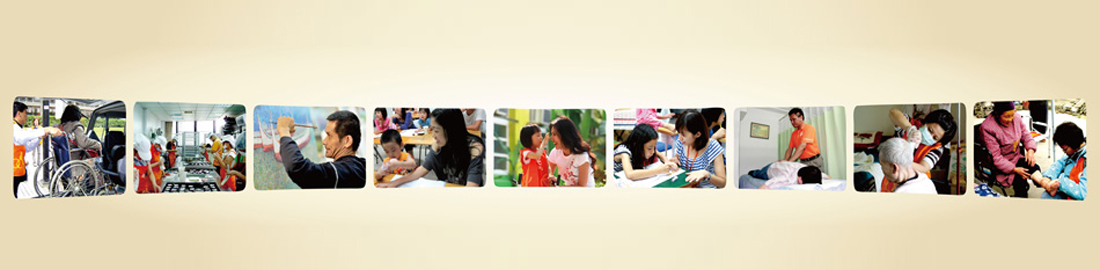
Therefore, in 2016, the government took action to adjust the project, and propose a long-term care 2.0 project, aiming to make the services localize, and be more useful for people who are in need of the care services. The services provided by Eden’s elderly care service is diverse yet not limited. It provides space and chances for elderly to have a place for mutual learning and exchange. As for elderly who cannot live independently, Eden provide day care services and home visits, bathing assistance is one of the popular services among it.
In recent years, there is a growing need of paradigm shift for caretaking service system. The new concept for caretaking service is to put emphasis on the rights for every person instead of “giving aid”. This is also the core value of Beitou elderly daycare center.
“Taking care of elderly is very different from taking care of young children. Seniors have their living experiences and their own ideas, you should not try to change their ways of thinking. They do not need you to teach them how to do or what to do, they need respects,” explained Bi-Hui.
“We do not force our senior members to do anything here. We do have a schedule for what activities they can participate in. But it is their own decisions and wills for what they want to join or not to join,” she showed me the timetable of daily activities during the week. “This morning they will be reading newspapers with our staffs in two groups, in Mandarin and Taiwanese. Then it will be physical exercise time, which our staffs will lead different groups of seniors to do some mild physical activities. In the afternoon we will have our weekly karaoke.”
Looking around, the center does not give people the impression of a typical care center. It does not have beds, or medical devices. Instead, the atmosphere is relaxing and comfortable, filled with lots of materials used by the staffs to assist the elderly or games that elderly play together with.
“Beitou is famous for its hot spring. So we also provide our seniors scheduled time to enjoy a good footbath.” We passed through an open room, where some footbath buckets can be seen.
Apart from the flexibility and respects for seniors, Beitou daycare center is not short from providing professional care service. This can be seen from their personalized lunch menu for every senior.
“We cooperate with and consult Mackay hospital’s professional food and beverage sector and individually design every senior members’ lunch. Of course, all food provided for seniors need to be relatively less salty and softer. But some of them need to eat smashed food, and the others might need to avoid certain kind of food that causes their allergy or uncomfortableness. In this case, it is very important to design a personalized menu based on everyone’s need,” said Bi-Hui.
Before the lunch arrived, staffs in the center gathered all seniors to the dining room, and asked them to do “mouth yoga” together first. “Elderly need to pay more attention to every muscle usage. The yoga can help them soften their facial muscle and stimulate saliva production,” explained the staff who led the yoga section.
After a brief lunch break, the staffs woke up everyone who was having a nap for participating in the karaoke section. However, many of the elderly did not cooperate with the staffs and started to walk in circle around the center.
This is called “sundowning”, a neurological phenomenon associated with increased confusion and restlessness in patients with delirium or some form of dementia. It usually associated with Alzheimer's disease, but also found in those with other forms of dementia. It commonly appears with patients in the afternoon, or as the term shows, around the sunset time, it usually makes the patients have a multitude of behavioral changes, such as anxiety, nervousness and serious confusion about time and direction. Research shows that 20–45% of Alzheimer's patients will experience some sort of sundowning confusion.
“They are usually very anxious after they wake up from their nap. Especially because we turn down the light for screening the karaoke, they will feel extra intense and confused from the darker lights. But we don’t stop them from doing anything, as long as they are safe in the center,” explained one of the staff, and further told me that the only way to stop them from being anxious is to find something to distract them, such as karaoke singing, play chess games, or painting. “We offered them choices, if they would like to take the choice and sit down to focus on the thing, they will forget about their anxiety.”
Miss Yang continuously walked in circle around the center from the morning until the afternoon. She is one of those dementia patients who suffered from the syndrome. She refused to join the karaoke and kept walking in speed. One of the staff took out a checkerboard and asked her if she wanted to play with him after the karaoke section.
Miss Yang was interested in the checker game and finally sat down.
“She is very good at it, “whispered the staff to me.
Miss Yang disrupted him and claimed, “I don’t know how to play this game!”
However, she skillfully won the game in the end. “I have never played this game before. How weird,” said Miss Yang after she won the game, confused.
The staff again whispered to me that actually Miss Yang played checker board game very often and is very good at it. “But she doesn’t remember. Every time you asked her, she will say she doesn’t know how to play.”
Miss Yang again murmured to herself, “I am so dumb, I can’t remember anything. I must be a stupid person.”
“Hey Miss Yang, don’t you remember Psalm 23? Would you sing for her?” said the staff, referring Miss Yang to sing for me. She hesitated a while, then started singing, “The LORD is my shepherd; I shall not want. He maketh me to lie down in green pastures: he leadeth me beside the still waters. He restoreth my soul: he leadeth me in the paths of righteousness for his name's sake. …”
I watched her, tears blurred my eyes. I remembered what Bi-Hui told me from the beginning of the day: “All senior members here, they have their stories. They might suffer from dementia or Alzheimer’s, but they are all human beings like you and me. They have feelings, they have memories, they need our respects, not just pity.”


