






This year, May has become a dark month for humanity around the globe. Manchester encountered the most deadlist bomb attack on May 22 since 2005, the London transport attack that killed 52 people; while few days ago, there were more than 50 people killed in suicide attack across Iraq on May 19, including Basra and Baghdad city. All three suicidal bomb attacks were claimed responsibility by the Islamic State (ISIS).
The Manchester attack had claimed 22 people’s lives and injured dozens more, many still in life threatening condition now. Without doubt, the attack happened in Manchester triggered world response and a counter-terrorism investigation has taken place across nations and borders, which the UK called for an international cooperative networks. UK Prime Minister Theresa May raised the UK terror threat level to critical and claimed to sweep through the networks of “possible group of individuals linked to this attack”.
Few days before the Manchester attack, on May 19, at least 33 people were killed in Basra, whereas two more similar suicidal bomb attacks took 19 more lives in Baghdad. According to British explosive weapons used on civilians monitoring organization, Action on Armed Violence (AOAV), Iraq saw at least 6,359 civilian death and injuries caused by explosive violence, such as suicidal bomb attack, improve explosive devices or landmines last year. Although the number of incidents decreased in Iraq, the number of casualties it caused increased by 19%. Moreover, civilians killed by suicidal attacks increased by 121% compared to 2015 monitoring result.
It is more than horrible for the world to witness what had happened in Manchester. However, at the same time, we should not forget that there are also many lives taken over the deadly suicidal bomb attacks in Iraq despite the neglect of reports from international media.
Inevitably, it reminds us what happened last year in Paris and Beirut- two attacks separately claimed by ISIS that caused many civilian lives in both cities; in which Facebook had activated a social network for the first time for bomb-attacked type of incidents for people to notify and connect with each other in the French capital.
“When my people died, they did not send the world into mourning. Their death was but an irrelevant fleck along the international news cycle, something that happens in those parts of the world,” wrote Elie Fares, a Lebanese doctor, in his widely shared blog post after the world paid tribute to Parisian victims but nearly ignored those in Beirut. It indicates the fact how the media or world power does not pay attention to people’s lives when it comes to war-torn or conflict areas.
What is going on in Iraq, Syria, or the whole Middle Eastern countries where civilians are suffering daily life threats from explosive weapons has become almost mundane to news audiences and politicians. In the same article written by Doctor Fares, he further pointed out the reasons behind this neglect is “because Beirut is a city that most people would associate with violence and war, it’s a city where they think the attacks are part of everyday life, or think Beirut is a city where such a thing occurs every single day.”
A number of scholars and commentators have suggested that the binary mind concepts can be concluded as several different factors, such as tourism patterns and cultural familiarity. Both France and the UK are top touristic places where people around the world pay visit to it on a daily basis. On the other hand, Beirut and Basra, Baghdad, are seen as “the other side of the world” that perhaps everyone is involved in violence inclusively. People generally do not expect something “barbaric, violent” would happen to the long-historical and picturesque travelling destination in Europe.
We, as news readers, might not be aware enough to notice how media was and is shaping the political discourse not only in our countries, but also around the globe. But we can start the change from now to “spare” some of our time for every civilians who suffer in indiscriminative attacks. Places like Beirut or Baghdad were not full of violence and explosions all the time throughout history. They were once cultural-rich, diverse and prosperous cities.
As an organization that regularly pay attention to human rights related issues, Eden Social Welfare foundation also calls on states and everyone in the world to urgently notice and address the threat of explosive weapons posed on civilians. There is an urgent need for more preventative measures to be implemented as well as a cooperative network of victim assistantship across the countries.
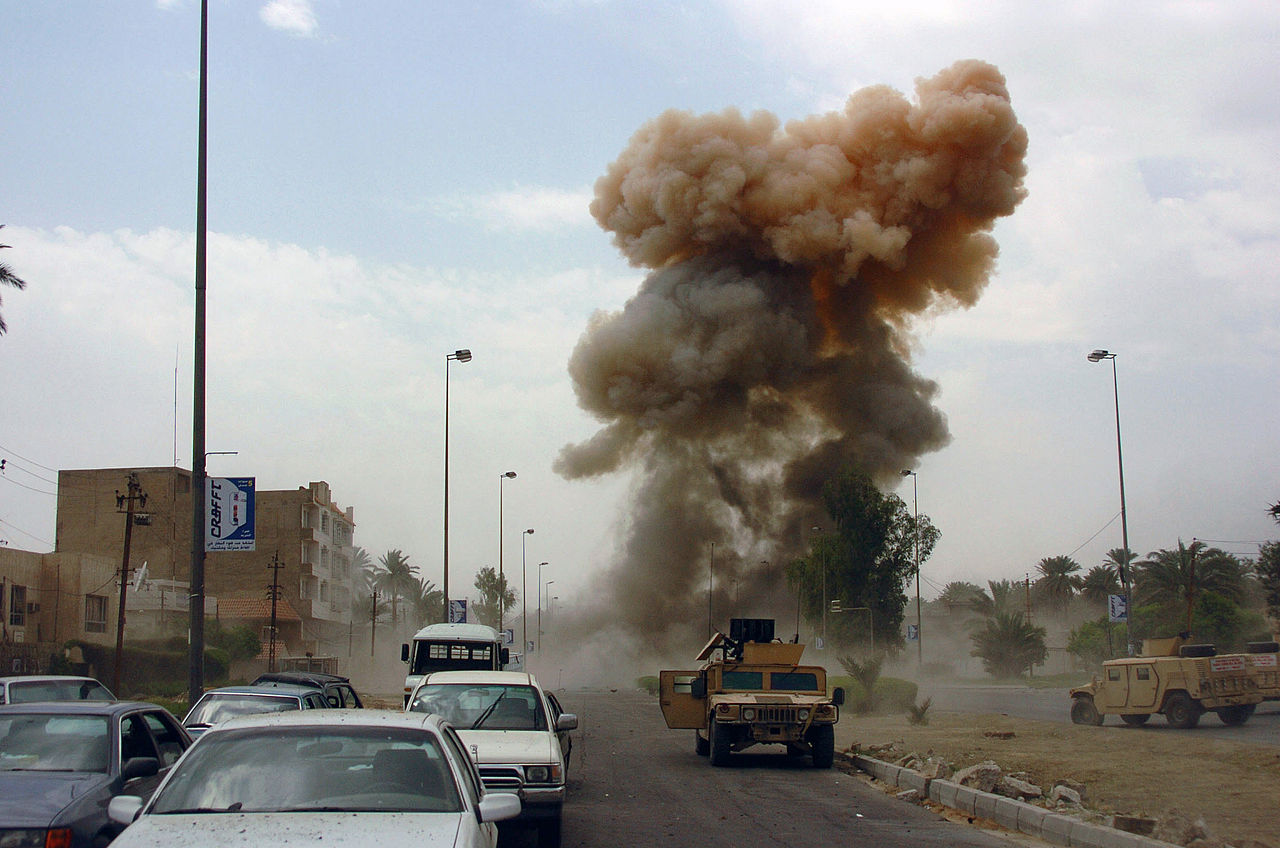
This is a conceptual picture where a car bomb attack happened in Baghdad from Wikipedia archives, not the picture from May19, 2017's Baghdad attack.


