


Walking inside the art gallery of the “Asia-Pacific Accessible Art Exhibition”, one would be stunned by the beautiful, inspiring and creative artworks. The thing that might stun visitors more is the fact that all these breath-taking artworks are created by artists with different disabilities around all Asia-Pacific regions.
This year, Eden Social Welfare Foundation has included artists from five different countries -- Thailand, Vietnam, Hong Kong, Macau and Taiwan. Every artist who participates in this exhibition has a different story and disabilities mentally or physically, however, they share one thing in common: their passion and love to art.
“A process and journey of expressing one’s inner self and self-reflection, it sometimes is also used in overcoming and coping with pain and abuse in one’s earlier life stage, ” described Lin Xiao-Pin, chairperson of the Taiwan Art Therapy Association, of what art can do to a person as a therapy application.
Art therapy has proven to be a very successful form of treatment in rehabilitation for people with disabilities. The process of this psychotherapeutic service allows service users to express themselves in a non-verbal, artistic and creative way. It is, according to several scholars, a treatment that can help with users’ overall development and learning ability. People with disabilities are sometimes having difficulties to receive and understand information from the world and others around them. For instance, difficulties including the limitation caused by visual and hearing impair to shield them from receiving information properly. It also needs to take into consideration their psychological and mental condition that might make them overly sensitive or confused with instructions.
Notable expressive art therapy researcher, Professor Stephen K. Levine, points out, “the task of therapy is not to eliminate suffering but to give a voice to it, to find a form in which it can be expressed. Expression is itself transformation; this is the message that art brings.” This approach is a very effective tool for psychiatrists or counselor to assist people with different disabilities, special needs and behavioral issues.
Not only the process of learning art-making, such as how to paint or sketch, but also the use of holding paint brushes, pinching clay or touching colored pigments is helpful in developing service users’ sensory perception, as well as stimulates brain functions, Lin explained, “The result of their artworks can give them a sense of achievement and create a peace of mind.”
The application and research of art therapy on people with various disabilities in Taiwan has existed more than a decade. It is extensively applied in Taiwan in several areas, including but not limited to children suffer from developmental disability, intellectual disability, ADHD or autism. As for adults, it is often used for the treatment of trauma, depression as well as physical disabilities. It bridges the gap between people who is unable to communicate or express themselves completely and their family, friends and counselor.
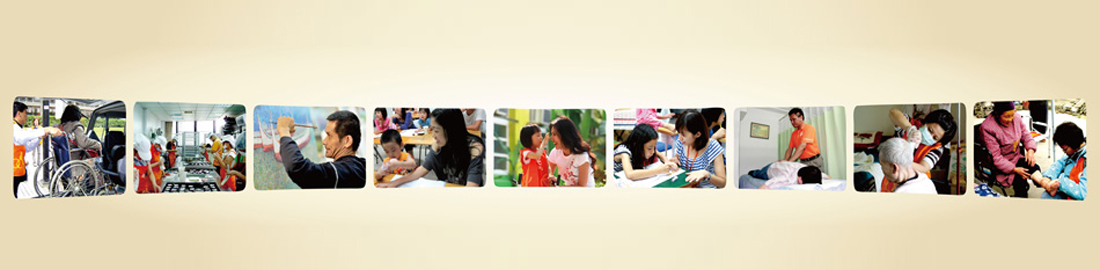
Taipei Wanfang center and Taipei Hoa Quan Home, associations of Eden Social Welfare Foundation have been devoted to helping people with physical or mental disabilities to develop life skills, adapt to the society and facilitate their self-independency and self-expression ability in the past decades. They started to include art as rehabilitation and emotional therapy for years. In the beginning, it was not really for medical purpose but more for a skill-training and development purposes. It turned out to be a huge success in assisting service users from all associations to improve and progress drastically.
Lin indicated that even though art therapy is a relatively new psychiatric treatment in Taiwan, it has already established its own style and way. Different from British schools, Taiwan takes its path of combining therapy with counseling.


